- John Smith, The General History of Virginia, New England, and the Summer Islands
- William Bradford, Of Plymouth Plantation
- Thomas Morton, The New English Canaan
- Anne Bradstreet, Selected Poems
- Mary Rowlandson, A Narrative of the Captivity and Restoration
- Jean de Crèvecouer, Letters from an American Farmer. Letter III: What Is an American
- Benjamin Franklin, The Autobiography (A Selection)
- Thomas Jefferson, The Declaration of Independence
- Constitution of the United States
- Phillis Wheatley, Poems on Various Subjects
- Olaudah Equiano, The Interesting Narrative of the Life of Olaudah Equiano, or Gustavus Vassa, the African, Written by Himself
- Harriet Jacobs, Incidents in the Life of a Slave Girl, Written by Herself
- Frederick Douglas, Narrative of the Life of Frederick Douglas, an American Slave, Written by Himself
- Henry David Thoreau, On the Duty of Civil Disobedience
- Edgar Allan Poe, The Raven
- Edgar Allan Poe, The Fall of the House of Usher
- Ralph Waldo Emerson, The Poet
- Walt Whitman, Leaves of Grass (A Selection)
- Emily Dickinson, Poems
- James Fenimore Cooper, Introduction to The Last of the Mohicans
- Washington Irving, Rip Van Winkle
- Abraham Lincoln, Gettysburg Address
Literature in what today is the United States of America is largely derived from attempts to overcome the disproportion in viewpoints between the old world and the new. In their endeavors to do so, authors would sometimes rely on imagination, for reason alone was not reliable enough to capture the sense of the underlying truth. Captain John Smith's narration of the events he supposedly experienced in early seventeenth century Virginia can hardly be taken as reasonable. Yet the far-fetched story he told of how Chief Powhatan's daughter Pocahontas saved his life is still popular, and Smith's personal account of his feats and great achievements in Jamestown, hovering between fiction, history, and myth, captivates the minds of readers today as it did in the 1600s. No less imaginative are both William Bradford's chronicle of the Puritan settlement and subsequent prosperity-at the natives's expense-in Massachusetts, which to his mind was owing to the stuff of divine grace; and, Mary Rowlandson's narrative-the first American bestseller-of her captivity among the Wampanoags and her subsequent release, in which the author fancied that her redemption was ultimately brought on by the grace of God. Indeed, it would seem that imagination is the true American frontier, a vision stretching across time from the colonial period. Pretending to realism, American literary authors, perennial outsiders in the European old world establishment, envisioned a new world. But as the free verse poems of Walt Whitman suggested, the old fixed state of mind was simply unequal to the task of giving a more truthful expression to the pulsating human vibrancy of America.
Moreover, from the start the new world's conception of itself was at odds with its contradictions. In the late 1700s, Thomas Jefferson, a Southern slave owner, conceived in the Declaration of Independence that the American Revolution embraced the notion of "Life, liberty, and the pursuit of happiness"; and in the mid-nineteenth century, Henry David Thoreau's mental image of what governance of America should be encompassed the view that that civil disobedience was the only way to address the young Republic's tolerance of slavery and its inceptive venture into imperialism. The country continued to grapple with its old world legacy of institutional slavery and the resulting malaise of shame it brought, which was further exacerbated by narratives written by former slaves like Harriet Jacobs and Frederick Douglas, who dared to imagine and struggle to achieve a more meaningful and felicitous lives, and whose testimonies, powerfully written in their own words, presaged the American Civil War.
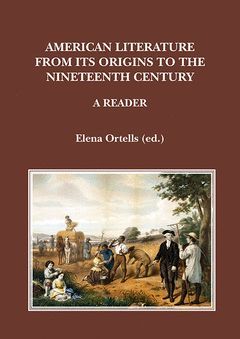
In American Literature from its Origins the Nineteenth Century, Elena Ortells has compiled extracts written by these authors and some of the other more outstanding voices of this early period in American life. It is a unique window into the minds of real people who endeavored to articulate the gestation of the illusive American Dream.